Education

KY Academy of Science is More Politics than Science

The Kentucky Academy of Science is More Politics than Science

The Kentucky legislature recently passed legislation that was vetoed by the Governor. The legislature subsequently overrode the veto, which is now law. That legislation was Senate Bill 150.

Several high profile groups opposed passage of the bill, including the League of Women Voters of Northern Kentucky, the ACLU, and the Kentucky Academy of Science (KAS).

Why would these groups oppose a bill that prohibits children in grade five and below from receiving instruction on human sexuality or sexually transmitted diseases without a parent’s written consent?

Why would they oppose a bill that allows instructional material on human sexuality or sexually transmitted diseases to be inspected by parents?

Why would anyone oppose a bill that allows special accommodation for students who assert their gender is different from their biological sex but does not allow them to use restrooms, locker rooms, or shower rooms designated for the opposite biological sex while they are present?

Finally, why would a reasonable person oppose a bill that prohibits prescriptions of puberty blockers, sterilization surgery, or surgery that artificially constructs or removes genitalia for people under 18?

The bill passed overwhelmingly 75-22-1 and the veto override vote was 76-23-1.

How can groups such as KAS be so out of touch with the values of ordinary Kentucky citizens? The answer lies in a struggle for who will have control over children. Like gun control, certain groups believe that greater influence (power) can be achieved by demanding unfettered access to children, marginalizing parental rights, limiting healthcare choices, or prohibiting firearms. When parents no longer have control over what is taught and practiced at school, the personal freedom of families is at risk. Those who have power generally wield it for some benefit. When power is applied correctly, we call it justice. When it is abused, it is corruption.

The Kentucky Academy of Science is a political organization that claims to advocate for science. This includes policy they think is related to science or policy that benefits their relationships with elected officials who control the purse strings for state funding. What other types of policy does KAS advocate? Here are some samples:

Of these policies, the first two have been invalidated due to their ineffectiveness while the second two have nothing to do with science. These policies also severely restrict personal freedom and choice, yet they continue to be advocated by KAS.

For SB 150, KAS issued a statement shortly after the bill’s initial passage claiming it would restrict parental rights and result in an increase in suicides by adolescents who identify as transgender. This claim that transgendered adolescents have higher suicide rates is false. According to Biggs (2022), the articles cited by KAS are based on inaccurate data and convey an alarmist urgency that is unwarranted. It seems KAS would like parents to have a choice, but only if it involves agreeing with their point of view. The statement also made no mention of the rights children have to privacy when using a locker room or shower.

Another statement issued by KAS before the legislative override claimed that SB 150 would subject students to harm and bigotry. Their stated position was, “As a scientific society, we hold that our state should respect health professionals as they make decisions for their patients based on the best medical science available.” If this is true, why does KAS continue to support mask and vaccine mandates when most health professionals have stopped supporting them?  It appears that KAS is neither interested in the opinion of health professionals or the opinion of parents.

The irony is that the positions taken by KAS are not grounded in science. Chromosomes determine gender. A person’s feelings or opinion of their gender have no effect on their biological sex. Cosmetic surgery may change appearances, but it never changes the DNA of a person. Children do not have the maturity or requisite knowledge needed to make informed decisions about their gender and sexual identity.

Information on sexual identity that is shared with children must have parental consent. Young people should not feel uncomfortable using the restroom. SB 150 provides a vehicle for transgender accommodations, but young girls should not be required to share a bathroom with a biological male nor vice versa.

Children do not belong to KAS or any other group outside the family. Parents have a responsibility to raise children safely at least until the age of 18. Educated adults can then make informed decisions for themselves. Parents have a right to protect their children from influences they deem unhealthy for their kids. KAS has become corrupted with power politics. They should stick to true science or shut up.

Mark Doggett, PHD

About Mark

Education: Doctorate at Colorado State University Interdisciplinary Studies with B.S. and M.S. degrees in Industrial Technology from California State University Fresno.

Mark has twenty years of experience in higher education with thirteen years as a full-time educator. Twenty years of experience in business and industry including defense aerospace, food and beverage manufacturing, farm and irrigation products.

To contact Mark, email mark.doggett@wku.edu

SBDM Council Schedule

Increasingly the public is learning about the power of Site-Based Decision Making (SBDM) Councils – groups created to write school policy and make a wide range of decisions as outlined by Kentucky law. Site Based councils were designed to promote shared leadership among those who are closest to the students. Most councils include three teachers, two parents, and an administrator. Parents are elected to the council and each school has its own council.

However, many citizens do not know that these meetings are open to the public.

If you are a parent and want to be involved in your child’s school – council membership is important. Concerned citizens are also encouraged to attend meetings to learn what’s going on in your local school – and see your tax dollars at work.

Warren County Schools

Elementary

Alvaton

2nd Monday each month at 4:15 pm in conference room in office area.

Briarwood

February 13, March 13, April 17, May 8, June 12 at 4:00 pm in school conference room

Bristow

2nd Tuesday each month at 3:30 pm in SBDM meeting room

Cumberland Trace

February 23, March 30, April 27, May 25, June 29 at 4:30 – 5:40 pm in the library

Jennings Creek

3rd Thursday each month (next meeting is 2/16) at 4:45 pm

Jody Richards

Next meeting is 2.13.23 at 4:00 pm in office

Lost River

2nd Tuesday each month at 4:00 pm in office

Natcher

February 27, March 20, April 17, May 15 at 4:00 pm in library

North Warren

Next meeting is 3.24.23 at 7:15 pm in library

Oakland

March 1, May 4 at 4:30 pm in library

Plano

Next meeting is 2.14.23 at 4:30 p.m.

Richardsville

February 6 at 5:00 pm in library or conference room

Richpond

March 13, June 8 at 4:00 pm in front office

Rockfield

Pending response.

Warren Elementary

Meeting dates and times announced on Facebook page.

Middle Schools

Drakes Creek

2nd Tuesday each month at 4:00 pm in library

Henry F. Moss

2nd Tuesday each month at 3:00 pm

South Warren

February 16, March 23, April 20, May 18, June 15 at 3:15 in SWMS Conference Room

Warren East

February 28, March 28, April 25 at 3:30 pm and June 20 at 5:30 pm

High Schools

Greenwood

February 22, March 22, April 19; special called for May and June at 4:00 pm in library

South Warren

February 6, March 6, April 3, May 1, June 5 at 3:00 pm in the library

Warren Central

3:00 Conference Room 144

Special called meetings will be scheduled as needed

Warren East

February 27, March 20, April 17, May 15, June 12

3:30 pm in the library

Other Schools

GEO International High School does not have a SBDM council

Kentucky Tech (Warren County ATC) – does not have SBDM council

Alternate Schools

The following schools do not appear to have SBDM councils

Jackson Academy

Lighthouse Academy

Warren County Day Treatment

Beacon Academy

212 Academy

Bowling Green City Schools

Bowling Green High School

Monday, March 20, 2023

Monday, April 17, 2023

Monday, May 15, 2023

Monday, June 19, 2023

5:15 p.m. in Classroom 110

BG Junior High

Last Tuesday of each month at 4 p.m. in BGJHS Conference Room

Dishman McGinnis Elementary

Last Monday of each month

3:15 p.m.

Parker Bennett Curry Elementary

Third Monday each month at 4:00 p.m.

Potter Gray Elementary

March 14

April 11

May 9

June 13

3:20 – 4:20 p.m.

T.C. Cherry Elementary

March 23

April 27

May 25

3:30 – 4:30 p.m.

W.R. McNeill Elementary

Second Tuesday of each month

3:30 p.m. in library

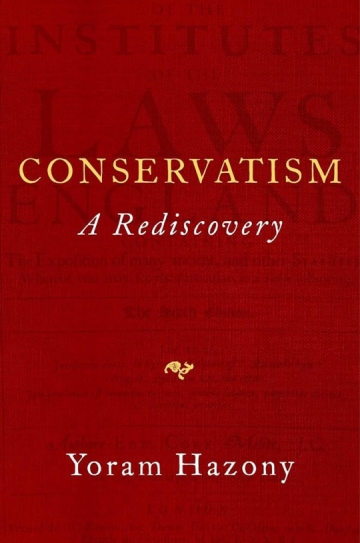
Book Review: Conservatism: A Rediscovery

At the top of every conservative’s reading list for 2023 should be Yoram Hazony’s latest book, Conservatism: A Rediscovery. Hazony offers a comprehensive look at how liberalism has failed and given birth to a rising cultural Marxism; how the rediscovery of true, Anglo-American conservativism offers our best hope for the future; and how advocates of tradition must be willing to do more than spout conservative ideas but must actually live a conservative life.

To understand Hazony’s ideas it is important to understand that much of the American “conservative” political agenda of the last half century has actually been a form of right-leaning liberalism. Americans often use the term “liberal” to exclusively describe Democrats, “progressives,” and various left-wing ideologues. But this is a recent and rather novel application of the word and many of today’s so-called conservatives are, in fact, liberals in the classical sense.

Liberalism, as Hazony explains in great historical detail, is a modern political philosophy that dates back to John Locke, based on the assumption that the “free” individual is the basic unit of society. Liberalism posits that human beings can use pure reason to arrive at universal political principles to organize societies based purely on personal consent. Liberals believe that the main purpose of government is to maximize individual liberty, freeing us from the constraints of tradition, which is always viewed as backward and oppressive.

Hazony contrasts liberalism with conservatism, which takes many forms across different cultures. His interest is in the specific tradition of Anglo-American conservatism, which emerged from the British constitution and was best embodied by the ideas of key American Founders associated with the Federalist Party, including George Washington, John Adams, and Alexander Hamilton, among others. These Founding Fathers did not see the new American republic as a radical departure from tradition, a new order based on pure reason and the idolization of the individual, but rather as the restoration of a British heritage dating back to Magna Carta in 1215 A.D.

Anglo-American conservatism honors the dignity of the individual (based on key principles rooted in the Judeo-Christian religious tradition), but sees a far more robust and complex purpose for government than merely the protection of individual rights. Conservatism recognizes that human beings are born into social structures, including the family, clans, tribes, and nations. It is through these social structures that human beings learn to exercise honor and live virtuous lives.

“Political obligation is a consequence of membership in families, tribes, and nations,” Hazony explains. Governments exist to help preserve these traditional social structures and reason alone cannot guide us in determining the best course of policy for any given people in a given time. Good government includes democratic structures that allow groups with varying interests to peaceably compete with one another without resorting to violence. These structures include a strong executive, separation of powers, and a respect for private property, but also a deference to religion as the moral foundation of society and a concern to balance individual liberties with the protection of the common good (thus conservatives favor trade policies that ensure the nation’s economic independence and immigration policies that welcome newcomers but expect a level of assimilation to the overall national culture).

These principles of Anglo-American conservatism generally guided much of U.S. political affairs at all levels of government until the end of the Second World War (Hazony discusses the notable trauma of the American Civil War and how the Confederacy and its legacy of racial discrimination was based on principles that contradicted core values of the Anglo-American tradition).

However, after the World Wars Western nations universally adopted a modernist, liberal point of view, falsely believing that the honoring of traditions was what contributed to the rise of fascism. Religion was summarily rejected from the public square and the focus of the entire culture became the elevation of the individual and the maximization of personal freedom. Even people who thought of themselves as conservatives tended to adopt this worldview, endorsing open borders and free markets in ways that eroded national sovereignty and the integrity of local communities and traditional families. By the end of the Cold War, Anglo-American conservatism had been utterly marginalized and the values of liberalism were universally accepted everywhere.

The results, as we know, have been devastating. In a particularly lucid chapter, Hazony describes how the blind spots of liberalism, which refuses to recognize the importance of any institution that stands between the individual and the state, inevitably leads to totalitarianism. Liberalism is especially incapable of mounting a defense against the rise of cultural Marxism.

The greatest concern of liberals is to free the individual to maximize personal choices. And since Marxists see oppression of the individual everywhere, the liberal is far too willing to allow accommodations that expand the power of the state in the name of freeing the individual from their oppressors. Thus liberals cooperate repeatedly with the steady expansion of the Marxist agenda until they, too, are made subservient to its goals.

Hazony shows how traditional conservatism provides time-honored, effective ways to make adjustments in public policies to redress the legitimate grievances of minority groups without destroying the very fabric of the culture that gives rise to such concerns in the first place. But the only way to turn back the Marxist tide, Hazony argues, is for liberals to acknowledge the danger and make alliance with traditional conservatives to openly oppose their “woke” agenda.

The last section of the book includes some personal reflections about Yoram Hazony’s own life journey as a conservative. In perhaps the most powerful chapter of Conservatism: A Rediscovery, Hazony argues that those who see value in conservatism must ultimately commit to living a conservative life. This means, among other things, committing to marriage and having children, being a part of a religious congregation that preaches and practices traditional values, and investing in the local community.

No matter what kinds of choices one has made in the past, Hazony argues that it is never too late to take up the work of living a conservative life. Our own well-being, and definitely the well-being of future generations, is at stake.

Conservativism: A Rediscovery is a vitally important book for anyone who wants to make sense of why it feels like American society is coming apart at the seams. Yoram Hazony shows what we’ve lost as a culture, and why. He also points a way back that requires much more than just voting a particular way. In fact, the conservative agenda is far more than a political program. It is a way of life, and one we should commence to live more fully.

About the Reviewer:

Gary W. Houchens, PhD, is professor of education administration at Western Kentucky University. A former teacher and school administrator, Gary serves as a policy advisor for several Kentucky education reform organizations. From 2016-2019 he served on the Kentucky Board of Education.

How Charter Schools Work

With Gov. Beshear predictably poised to veto Kentucky’s new charter school law, I thought I’d reshare this piece from 2018 explaining how charters will work. Everything is essentially the same under the new law except a permanent funding mechanism has been established and districts have even MORE power to keep charters from operating in their boundaries. (Oh, and I’m also not on the Kentucky Board of Education anymore because Beshear fired me…for supporting the concept of charter schools.)

Contributed by Dr. Gary Houchens, Western Kentucky University