Culture

Riley Gaines Speaks Out

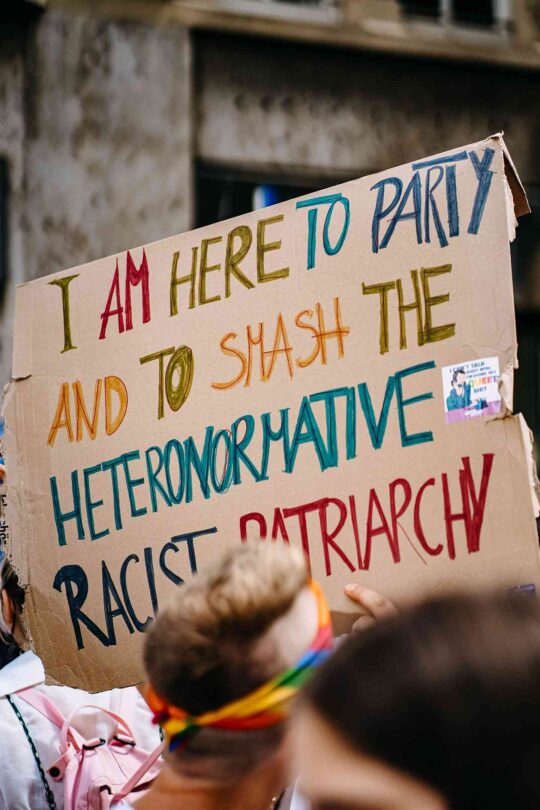
On Wednesday, September 27, 2023, we attended the Kentucky Commonwealth Policy Center (CPC) sponsored event titled An Evening with Riley Gaines. If you have not been following the news, Riley Gaines was a world-class swimmer for University of Kentucky (UK), being one of the most decorated in UK history. She was also the 2022 Southeastern Conference Women’s Swimming and Diving Scholar-Athlete of the Year. Riley has gained respect from conservatives and notoriety from progressives for her defense of competitive women’s sports after being forced to swim against a male. She was also forced to share a locker room without warning with the same man, William Thomas, who has used the name Lia since 2020. More about Riley Gaines can be found on her website https://www.rileygaines.com/

A video of the event, An Evening with Riley Gaines is available at:  https://www.youtube.com/watch?v=YaCMIkXoWv8

Now a bit about the event itself and our impressions. Our estimate of the event attendance was between 250-300 people, with a sizeable representation of young women. The guest list also included more than a couple dozen state and local representatives. The level of support for the event was inspirational. According to the announcement, finger-food was to be served, so we ate a full meal before arriving. That was a mistake. The food was an extraordinary array of hors-d’oeuvres and small sandwiches, so of course, we loaded up our plates. After a prayer and the pledge of allegiance, we had about 40 minutes to socialize with our table mates.

After a brief introduction by Richard Nelson of CPC, Riley spoke about her rigorous life growing up in Tennessee to become a world-class athlete. This meant long practice hours and no social life. Her original career goal after college was to attend dental school, but all that changed after competing against Thomas. As a young woman, Riley briefly considered attending University of Florida, but decided to attend UK after visiting the campus. After her freshman year, COVID hit. Riley was forced to leave campus and go home. No gyms or pools were open, so Riley put on a wet suit and swam in Old Hickory Lake during her sophomore year. She discussed the immense pressure that was placed on all the athletes to get the COVID vaccine. The thinly veiled threats, intimidation, and theatrical tactics used by UK to try to force her to become vaccinated were later useful in teaching her to say no and helped her become an advocate for women’s rights.

Nonetheless, Riley was permitted to swim and prepared for the start of her junior season.

Expecting fair competition, Riley stated there were several red flags that led her to question the entry of William Thomas as a swimmer in female competitions, one being that he was formerly a mediocre male swimmer.  Even a mediocre male will dominate in female sports. Conversely, top-ranked women who compete as men are never competitive in men’s sports. Gaines tied Thomas in the 200m freestyle, but the trophy for the race was given to Thomas without proper explanation. It turned out that the primary reason was a media photo opportunity.

Riley was also forced to share a locker room with Thomas, experiencing extreme discomfort, anger, and frustration. Even though there were numerous whispering complaints from the female athletes, there was no advocacy for the women from the coaches, trainers, or athletic directors. The National Collegiate Athletic Association (NCAA) was complicit in this blatant violation of Title IX. No woman should be forced to share a changing space with a fully intact male. She stated the event was traumatizing for all the females.

The NCAA guidelines at that time stated that a male could compete as a female after 12 months of hormone treatment, which is not enough. Ironically, there were no guidelines for sharing a locker room with a male. The institutions side-stepped this issue by making the locker room unisex. Further, they did not share this information with the athletes until the time of the event. This was sexual harassment. While uncomfortable, none of the female athletes publicly objected at the time for fear of being canceled or disqualified. This was how the institutions were able to get away with it. Riley’s insight was that if a woman is not willing to stand up for herself, then nobody else will either. These were young women who were taken advantage of.

UK told Riley that she could not speak freely for herself, rather the university would speak for her regarding her experience. During the season, she was forced to undergo pronoun training and reminded that she represented the university. Riley subsequently ignored the university’s threats and contacted the media directly to discuss her experience. Only Mitch Barnhardt, the UK Athletics Director, publicly supported her. After initially being denied access under her real name, Riley bought a booth under an alias at an NCAA conference, so she could tell her story to other coaches and athletic directors. While most privately supported her, including the NCAA President, they all refused to sign public statements protecting the rights of women. She rightfully called them spineless cowards.

Swimmers from other universities were not so fortunate. They were told they would lose their scholarships, potential employment, and social standing by speaking out. They were told they could be held liable for their statements and could be accused if something bad happened to a transgendered athlete. They were also informed that counseling resources would be available to help them cope with their feelings of resentment toward having a naked man in their locker room. They were told to deny reality and accept the situation as being their problem, not his.    

Kentucky Sports Radio personality Matt Jones refused to interview Riley stating he did not want to get “political”, which is ironic as Jones repeatedly discusses politics on his radio show and wrote a book critical of Sen. Mitch McConnell. He also called Riley a bigot for standing up for her rights. Many other left-leaning outlets also refused to give her time to speak, citing hate speech.

Women’s feelings and safety don’t matter to many public officials, but 23 States have passed laws that ban men from competing in women’s sports. Even Title IX Federal law prevents discrimination in sports and requires higher education to allocate equal funding to both men’s and women’s sports. The U.S. House of Representatives passed a bill at the federal level this year that would ban transgender athletes whose birth was male from competing on girls’ or women’s sports teams at federally supported schools and colleges. The bill approved by a 219-203 party-line vote is unlikely to advance further because the Democrat-led Senate will not support it and the White House stated President Joe Biden would veto it. It seems that Democrat legislators are perfectly happy to throw their own daughters under the bus. They should be referred to Child Protective Services!

The International Olympic Committee bylaws claim there is no presumptive advantage that men have over women. These bylaws were followed by the NCAA until recently. Because NCAA knows this is wrong, they allowed the governing bodies for each sport to set the rules for competition. Some governing bodies, such as the World Chess Federation are favorable to women, whereas FIFA, the governing body for Soccer, is considering allowing transgenders to compete. U.S. Women’s Soccer player Megan Rapinoe has stated publicly that she absolutely supports trans players on the women’s squad. Interestingly, the women’s team under Rapinoe lost a match to an under 15 boys’ team during an informal training match in 2017.

Riley ended her talk with a discussion on the spiritual warfare taking place in our world. The breakdown of faith, family, objective truth, and changing of the language. There is power in words. She said to never refer to someone as a biological man or woman as this supports the left’s narrative. This is textbook Marxism. Men and women only. There is no slippery slope. We are being pushed off a cliff. Be willing to defend your wives and daughters. She said we need strong men. During WWII, men lied about their age to fight Fascism; now men lie about their sex to compete in women’s sports. That tells you where we are at in the spiritual warfare battle. Enough is enough.

For more Riley Gaines, I recommend the following:

September 2023, Freedom Night in America with Charlie Kirk: A TPUSA Faith Event. This video has similar content to the above but includes an insightful Q&A at the end. View the video questions at the 48 minute mark. https://www.youtube.com/watch?v=KMuBe8wE3K8

The Independent Council on Women’s Sports (ICONS) Summit: Psychological War on Women – Riley Gaines, Paula Scanlan, Holly LaVesser, Kylee Alons. This is a chilling video on the similarity between domestic abuse/violence against women and the participation of men in women’s sports. https://www.youtube.com/watch?v=KZIh_Le19ic

Mark Doggett, PHD

About Mark

Education: Doctorate at Colorado State University Interdisciplinary Studies with B.S. and M.S. degrees in Industrial Technology from California State University Fresno.

Mark has twenty years of experience in higher education with thirteen years as a full-time educator. Twenty years of experience in business and industry including defense aerospace, food and beverage manufacturing, farm and irrigation products.

To contact Mark, email mark.doggett@wku.edu

Progressivism In Our Town

Little more than a year ago, The Federalist sounded an alarm for conservatives in red states across America.  Noting that wokeness and identity politics was embraced in blue states like California, or red state urban areas, like Austin, TX, the author argues that Leftist ideas had infiltrated small towns in red states across America – unnoticed and unchallenged by local Republicans.

The author references a small town in east Tennessee with examples like a progressive reading list at the library, the town’s left-leaning newspaper, and the role of a radically leftist statewide organization in electing a progressive member to the “ostensibly” nonpartisan city council.

While I haven’t studied the reading lists at the Warren County Public Library, regular listeners to Talk 104.1 are familiar with the format change of The Morning Show. Broadcast on 104.1 FM from 6:00 – 8:30 a.m., the traditionally conservative commentary changed when talk show host Chad Young stepped away from the microphone and was replaced by Brian “Slim” Nash in 2021. The Bowling Green Daily News reports that Nash is a “a self-described liberal who fought as a city commissioner for a fairness ordinance that would have extended discrimination protections based on sexual orientation and gender identity.” While Nash says the show is “not about my opinion,” he acknowledges that it has traditionally been a conservative show. “The station’s management knew I was not a conservative,” Nash said.

A case can also be made for the progressive agenda creeping into local government.  In November 2018, Dana Beasley-Brown was first elected to the Bowling Green City Commission and subsequently re-elected in 2020.  Carlos Bailey joined Beasley-Brown on the City Commission in 2020.  Brown and Bailey were among a slate of progressive candidates endorsed by The New Power PAC, a political action committee formed in 2010 by Kentuckians for the Commonwealth. The New Power PAC, which raised $219,327.39 between 2019-2020, states that it “helps elect candidates that share our values and vision.”  In a 2018 candidate endorsement, Meta Mendel-Reyes, chairperson of Kentuckians for the Commonwealth, writes that through the New Power PAC, “ordinary Kentuckians and progressive candidates are working together to reclaim a democratic Commonwealth.”

The City Commission is composed of four commissioners and the mayor.  It’s not a far stretch to imagine the New Power PAC backing a third progressive candidate in the 2022 elections, and if successful, would give the movement a majority vote in city government.  

Born out of an alarming concern about the progressive movement in our community, Warren County Conservatives formed in 2020.  Our mission is to represent the conservative voice in Warren County by:

  • Endorsing and supporting candidates, elected officials and policy initiatives that promote individual freedom, limited government, and traditional American values.
  • Mobilizing citizens to resist political progressivism in our community
  • Providing a platform for conservatives to share news and perspectives

For the latest local conservative news, visit  Warren County Conservatives on Facebook or Twitter.  

Contributed by Tonja Tuttle, Proud Deplorable and Chair, Warren County Conservatives

An open letter to the Bowling green City Council regarding their proposition for a City Homeless coordinator:

To the Honorable Mayor Todd Alcott, and the Bowling Green City Council,

I am writing to add further comment to the opinion that I expressed in person on Tuesday July 6th.   The idea of adding a homeless coordinator position to the City seems like a trivial thing to oppose.  It’s just $50,000 plus benefits, and in our tit for tat world, I understand entirely Dana Beasley-Brown’s statement that her side should get this position given that your side added a position to coordinate the downtown revitalization.  For the record I oppose both, what exactly are we going to hire someone to do next? Coordinate street repairs? Lost cell phone recovery? Ah – how about codes enforcement? 

Wait you say – we already have folks that do those things?   My point exactly.  We have folks that do these things, and not just in city government – but in the private sector.   We have a codes enforcement division, we have a police department, we have departments that handle roads and infrastructure.  Why on earth would we add a position to coordinate efforts on behalf of the private organizations that already do this?    I can only come up with one reason…   one we find to often in our government.   When tackling an issue, we assume everyone else involved doesn’t know what they are doing, and they need someone to tell them what to do.    I say – that this is simply not the case.

Let’s take a look at the problem.  

First – we have to define the issue – a homeless person is – specifically someone who does not have shelter – nothing more, nothing less.

Second  – according to this definition; using the K count provided by the Kentucky Housing Corp.  there are roughly 180 homeless people in Bowling Green, this is up from 140 in 2014.   We could debate this count, but even if we double that number to 360 – it’s still less than ¼ of one percent of our population – or 1 in 400 people…    a very small portion of the population for which to dedicate a full time employee.

Third let’s look at the causes of homelessness

According to HUD there are five principal causes of homelessness:

  1. lack of affordable housing
  2. unemployment
  3. poverty
  4. mental illness and substance abuse and the lack of needed services.

Finally let’s discuss each one in detail:

  1. Housing the poor is a key element in any plan for dealing with homelessness; it starts with temporary shelter, and moves to interim shelter, and then low income housing.   I have already heard that local builders are very “interested” in discussing such efforts… but don’t seem to be very motivated with regard to actually bringing their efforts to bear on the issue.   I am sure this is frustrating…   a coordinator for the homeless is not the answer.  The key here is that the city already has a lever if they desire to pull it – zoning and development can significantly impact the amount of low income housing – as can the downtown re-development effort – through land and tax grants – similar to what has been done to bring development to downtown, other blighted areas could be addressed  (we have tons of empty tobacco warehouses….  Rezoning these in advance of development efforts would help that cause).  The key here is that there are already departments and positions within the city that are responsible for these activities – adding another layer of bureaucracy won’t solve the problem.
  1. Unemployment –  Jobs are not an issue in Bowling Green;  there are hundreds of open positions…. There are businesses begging folks to walk in and start work. There is a component of unemployment that has to do with behavioral outcomes (Drugs, criminal history, mental health, tragedy, physical disabilities), but there are at least three non-profits who deal with folks who are not employment ready, and they don’t need the city to coordinate their efforts.
  1. Poverty –  Poverty is an interesting challenge, and it often has more to do with negative outcomes than it does actual assets.  EG – it’s not a money equation, it’s a life skills one.   Having two children and being divorced creates a challenge,  bankruptcy creates a challenge, children out of wedlock creates a challenge…  Health issues and job loss create challenges. We can, and should build a safety net for folks in our community facing these challenges – but it needs to be a hand up; not a hand out.   The path through these services in Bowling Green is fairly well documented, and as I have heard from a number of these organizations, they work hard to help people understand not just how to access the services, but how to avail themselves of the services offered by other organizations in town.  There are ways the city can better communicate with these organizations, but that is through community outreach with the police department, the fire department – the folks on the ground who already interact with these folks on a daily basis…  they need to be empowered through policy to deal with panhandling, and to route the mom who just lost her apartment  to a homeless shelter.  To make undesirable behaviors well understood, but show compassion for those in need.  They don’t need yet another bureaucrat telling them how to do their jobs.
  1. Mental illness and substance abuse – These are one of the largest vectors for homelessness in Kentucky.   Our state’s struggles with this issue are well documented, and there are two organizations locally tasked with assitsing these populations, the Barren river health department, and the Warren county health department.   It is their responsibility to deal with the outcomes of mental illness and substance abuse;  a single coordinator’s position isn’t going to make a dent in the challenges we have in Bowling Green with these issues (of which a very small portion are homeless).   The homeless component of this population is best addressed through existing public servcies, our very capable police department, and those organizations serving the homeless.   Improving communications between these three groups is important, but that communications won’t come from outside of these organizations, it will come through policy changes, open discussion, and leadership.

For every one of the issues addressed above, there are already organizations and city / county / state departments that have responsibility to address these needs, in many cases redundancy upon redundancy.  A coordinator to address these issues would obviously need a great deal of authority… If it were simply a question of bringing folks together, the issue would have been solved long ago by the organizations that currently work to resolve this issue…  So where would this authority reside?   Who would this person report to?   What policy set would they govern?  Does this line of discussion start to make senes?  it’s a problem that can’t be solved in this manner, a coordinator isn’t the answer, it would just be a waste of taxpayer dollars.  Something we already have too much of in our state and federal governments, let’s not start it here too.  

Many Thanks,

Eric A. Tuttle, CISSP

Good Policy, Thoughtful Strategy Key to Addressing Homeless Issue

July 10, 2021

To Mayor Alcott and the Bowling Green City Commission:

It is not the role of government to fix social ills, like homelessness, nor is it your role, as our elected leaders, to solve this problem for our community.

Past attempts by the City to address this issue have failed, evidenced by Bowling Green’s role in Kentucky’s Ten-Year Plan to End Chronic Homelessness, a plan written by the Kentucky Council on Homeless Policy in 2005.

This does not mean that we should abandon the homeless.  We should support churches and organizations that are closest to this population and who serve them best.

The City should:

  • Develop good policy aimed at strengthening the fabric of our community.
  • Implement policies that build and support the role of local churches and organizations that serve the homeless.
  • Facilitate a discussion about revitalizing the South Central Kentucky Coalition on the Homeless.
  • Coordinate with local law enforcement to enforce existing ordinances and implement a city-wide campaign to discourage pan-handling, redirecting individuals to local agencies.
  • Reexamine the current zoning plan to determine whether it provides an opportunity to revitalize blighted areas, and whether it adequately entices developers to build multi-unit affordable housing.
  • Examine policy initiatives in other communities like Houston, Texas that have made significant, meaningful strides in tackling this issue.

Government is an impersonal institution that cannot address the personal and individual needs of those who are temporarily or chronically homeless.  These vulnerable people need a human connection and a social network that not only provide material needs, but also emotional, moral, spiritual and familial needs. These services are best provided by people, like the tireless volunteers and employees that embody organizations and churches devoted to the homeless in our community.

Sincerely,

Tonja Tuttle, Warren County Conservatives