Home

A Conservative Vision for Warren County

By Gary Houchens

Historically, Warren County is and continues to be a deeply conservative community. But the aspects of our community that most Warren Countians want to conserve are under threat from various forces in our larger culture and from within. That’s why it’s helpful to describe a conservative vision for Warren County, and why it’s so important to rally citizens around that vision.

We are a community that has long been united by a shared Christian faith, an appreciation for the strength and importance of intact, healthy families, and a sense of the common good that unites us even in our differences. Above all, these are the things we seek to conserve.

Faith, Family, and the Common Good. Religious practice and identification have declined somewhat in Warren County, just like in the broader, increasingly secularized culture. But our city and county are still dotted with a web of churches of various kinds and the thick networks of mutual love and support that make up their congregations. Non-Christian faith traditions are welcomed here too, but the Judeo-Christian perspective on God, the family, and the importance of community continue to provide the values and worldview of most Warren Countians.

We should be open and proud about the essentially Christian nature of our county. Public leaders should regularly acknowledge the importance of God in all aspects of our lives and actively encourage church attendance and the observance of religious traditions and promote a public ethos and public policies consistent with Christian ethics.

This means Warren County should continue to be a place for families, where our public policies and public messaging encourages young men and women to marry, stay together, raise children, and hand on our local values to future generations.

It also means we should encourage a strong sense of the common good. Warren County should be a place where people can make money, businesses of various kinds can thrive, ideas of all sorts can be expressed, and peoples of all walks of life are welcome. The diversity of our county is a strength. For decades we have welcomed refugees from some of the most troubled parts of the world and these newcomers are now established, contributing members of the community. But our sense of common purpose is greater than any of our various identities, economic interests, or lifestyles. A common good conservatism for Warren County has further implications for education, safety and order, arts and the environment, and a sustainable local economy.

Education. Warren County is blessed with two well-funded and generally successful public school districts, several faith-based private schools, and a vibrant homeschooling community. However, less than half of students in either public school district are proficient in reading and math. Increasing student achievement needs to be a high priority for our county. We need a much higher level of community engagement in our schools, both in terms of supporting students and in helping educators set an ambitious agenda for improvement.

Conservatives need to be actively involved in the local education system, running for and serving on the local boards of education and school-based decision-making councils. Churches and community groups should partner with schools to provide mentoring, counseling, and other resources to help families eliminate as many barriers to student learning as possible. While we will continue to welcome newcomers to our community with open arms, it is reasonable for local leaders to work with state, federal, and international officials to make sure our intake of refugees is sustainable and does not place undue burdens on our education and social service systems.

Like in most communities, our public schools have lost their original, conservative, purpose: to support parents in forming young people for lives of virtue and passing down to them the best parts of our cultural heritage as Americans and Kentuckians. We must ensure that our schools are safe and orderly environments, where students learn responsibility and respect and disruptions to instruction are not tolerated. We must partner with educators to ensure that students receive a rigorous, content-rich curriculum and science-based reading instruction. Books and instructional materials should be free from divisive ideological concepts.

Because no school, no matter how good, can be the perfect fit for every child, we must promote state policies that allow education dollars to follow students to the school of their family’s choice. Kentucky must fund students, not systems. Local political, education, and community leaders should be champions for school choice. Warren County deserves a rich, diverse education marketplace where every family’s schooling needs can be met according to their values and aspirations for their children.

Western Kentucky University and Southcentral Kentucky Community and Technical College are vitally important components of our education system and local economy. These institutions should reflect the goals and values of the local community and be good partners in forming young people and adults for lives of virtue and satisfying careers that contribute to the common good. Schools should encourage students to consider careers in a wide variety of sectors, including the military and skilled trades and prepare them for any post-secondary opportunity they wish to pursue.

Safety and Order. Warren County is blessed with dedicated first responders and our community deserves well-funded and well-operated police, jail, and fire services. These services are worth a generous public investment, even if that means occasional tax increases. Safety and infrastructure should be among our highest priority investments as a city and county.

Similarly, Warren County should be a child-friendly community. This means ensuring children are shielded from obscenity and other forms of vice, especially in public spaces.

Bowling Green and Warren County need a much more aggressive agenda to deal with homelessness and panhandling, which has reached proportions that threaten the local quality of life. Panhandling should be discouraged and curtailed to the fullest extent allowable by law. Homeless persons should not be allowed to loiter or endanger themselves, other pedestrians, or motorists in intersections and parking lots. We must expand shelters and other services to get homeless persons off the streets, into treatment for their addictions or mental illness, and back into productive lives. These efforts should primarily be driven by churches and charitable organizations, but with coordination, support, and sometimes funding from the city and county governments.

Arts, Beauty, and the Local Environment. A virtuous community values beauty, whether created by humans in the arts or by God in nature. The cultural and natural beauty of Warren County should be defended by conservatives. This means investments in and preservation of arts, parks, and recreation programs, after safety and infrastructure are fully funded. A conservative concern for the natural environment should also extend to private property. Careful zoning policies should insist on buildings with attractive, classical architectural styles and with development rules that protect the visual and functional integrity of neighborhoods. Preservation of historic homes, buildings, and cultural sites should be a conservative priority.

Careful, conservative planning policies should extend to land development outside of the city of Bowling Green. Warren County faces a crisis of affordable housing that should be a major policy priority for local leaders. However, too often in the recent past housing developments have been approved by area officials without sufficient attention to the impact on the natural environment or on infrastructure. Housing development must be better balanced with the preservation of agricultural land. Developers must be responsible for utilities, roads, and other infrastructure investments that will be necessary to support new neighborhoods.

A Sustainable Local Economy. Warren County has long been a regional hub for manufacturing, health care, retail, and dining. The availability of good jobs and our strategic location in the state are key reasons for Warren County’s ongoing population surge. Agriculture is also a historic centerpiece of the county’s economy and should continue to be prioritized, especially sustainable, family-owned farming operations. County leaders should continue their efforts to make the community attractive to high-wage employers in manufacturing, health care, and technology, but an equal emphasis should be placed on the growth and support of small, family-owned businesses. Conservatives should seek a healthy balance in all the various sectors of the local economy and insist that employers provide living wages for the benefit of stable, secure families.

In conclusion, there are many precious things to conserve in Warren County. But we can only preserve what is good in our community if we can name those things and what threatens them. We must be vigilant against economic patterns that erode the beauty and integrity of our families, neighborhoods, and natural environments, and against the corrosive forces of secularism, critical theory, gender ideology, and other far-left ideas that threaten our families, education system, public spaces, and sense of common purpose.

Let us unite to promote a positive, conservative vision for Warren County.


Gary W. Houchens, Ph.D., is professor in the School of Leadership and Professional Studies and Director of the Educational Leadership doctoral program at Western Kentucky University. From 2016-2019 he served as a member of the Kentucky Board of Education.
You Don’t Know What You Don’t Know – But Most of Us Never Cease Seeking It

By Chip Ford

It’s a challenge at best attempting to change someone’s belief who’s confident it’s true, despite not having bothered testing it nor giving it even a passing evaluation.

I helped run a successful grassroots taxpayers’ advocacy group for three decades in Massachusetts, of all places, until all my hope was gradually ground down and finally crushed to dust.  Five years ago, I escaped to Bowling Green.  Unexpectedly, I continued running the organization remotely by popular demand of the membership, but even that faded by the end of 2022 when I shut it down permanently.  Over those four years operating from exile, I frequently used part of Citizens for Limited Taxation’s email newsletters and on its website to advise members “It Doesn’t Need To Be ‘The Massachusetts Way’”.  I was warning that the state’s steadily increasing political repression and overbearing governing eventually makes escape the only option.

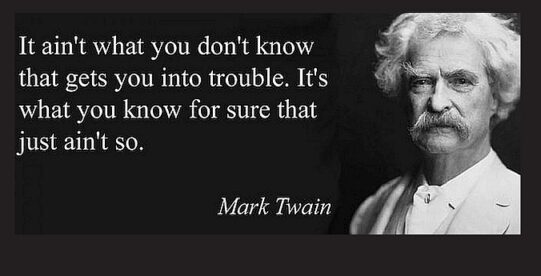
In those messages to CLT members I contrasted what I’d observed expanding back there to what I found here in Kentucky.  The comparisons were stark, even for me experiencing them firsthand.  But breaking through even those political activists’ latent complacency wasn’t working.  That’s when I realized it might not be possible when “You don’t know what you don’t know” and can’t fully comprehend until you’ve experienced the alternative opportunity.  Many of those members expressed envy for my new life, a handful had their own escape plans in mind, but few have acted on them.  Inertia, and for some their circumstances, are hard to overcome.

Even for the more adventurous of us, now termed “American Refugees” in a new book, packing up our lives and moving to a distant state meant cutting the cord to everything dear and familiar and starting all over again.  It was a difficult decision to leave behind a comfortable home and job, friends, neighbors, and family, favorite places, local knowledge and customs built over a lifetime.  We refugees abandon all that and more in pursuit of the American promise as it used to and is supposed to be.  When we found and adopted our new homes, many if not most have become determined, even zealous to keep it this time.  We were more than aware of its fragility.  We had suffered the loss of that American promise once already.

Soon after arriving here in my “sanctuary state” I volunteered with the Warren County GOP as a precinct co-captain, and through that I met some even more like-minded folks who were forming a new grassroots group whose intent was to “Keep Kentucky Conservative”.  This sounded like what’s necessary if Warren County and by extension all of Kentucky is to hang onto what we have.

“You don’t know what you don’t know” works conversely as well:  one’s accepted rights and liberty can be subsumed over time through citizen apathy and inertia.  When it’s not recognized that those values are gradually being eroded, when there’s nothing with which to compare the decline and gauge it, what happened in oppressive blue states can happen anywhere, even in Kentucky.  Unless enough citizens are vigilant and active, complacency permits unwanted change, which steadily redefines the accepted norms, until it becomes too entrenched to any longer reverse.

That’s what happened over time in the state I recently had to abandon.  Remember the instructions on how to boil a frog – gradually so it doesn’t jump out of a scalding hot pot?  That’s what happened in Massachusetts over past decades despite the determined resistance of not enough of us.  It can happen anywhere, including Warren County.

I just read the recently published “American Refugees: The Untold Story of The Mass Exodus from Blue States to Red States” by Roger L. Simon, a successful Hollywood screenwriter, a founder of PJ Media, and editor-at-large of The Epoch Times.  He and his family left behind their longtime residence in California to become what he termed “refugees” in red state Tennessee, coincidentally a few months ahead of my escape from Massachusetts in 2018.  Upon learning of his book, I wondered how much if any of Mr. Simon’s views would mirror my own experiences and observations.  I was not disappointed.  Here are a few excerpts from his book I especially related with:

Chapter 5:  Rolling Out the Wrong “Welcome Wagon”

Many locals claimed that these blue staters were coming to their pristine red states not to join them, but to pollute them ideologically.  Wittingly or unwittingly, migrants were carrying with them their liberal ideas and irreligious values. . . .

Some even contemplated setting up “welcome wagons” for the blue staters to remind them of why they had come in the first place, and to gently remind them to check their virtue-signaling social justice bilge at the door. . . .

The fear that blue staters were going to pollute red states with their indelible left-wing ideology, I came to learn, could not have been more baseless.

The problem, indeed, was just the opposite. 

(Page 16)

Chapter 6:  The Rise of a New Cavalry

The newcomers were anything but liberal and progressive, overt or otherwise.  They were American refugees: people who so rejected those ideologies, who so preferred to live in a constitutional republic, that they were willing to pull up stakes; quit their jobs; leave behind friends, family, and their accustomed ways of life; and trek across the country – all to live in accordance with their values.”

Meanwhile, their destinations – the red states – had problems of their own.  Most of them did, anyway.

Even reliably red Tennessee, which voted two-thirds for Donald Trump in 2020, had issues. . . .  there was a significant disconnect between many of the legislators and their voters.  A list of desires from the state’s conservative citizenry, for everything from educational reform to election integrity, went unanswered.  In the worst cases, politicians reneged on their promises, betraying their constituents. . . .  (Page 17)

A more pragmatic quote that keeps popping up is former Speaker of the House Tip O’Neill’s “all politics is local” – and for good reason.  The realm of politics that the people could change was mostly local, indeed almost entirely local.  Whether or not the refugee cavalry were aware of O’Neill’s quote, his principle was motivating their actions and continues to do so.  The battle to retrieve America is being fought in the local sphere, because here is the best place for it to be fought by the ordinary citizen. 

(Page 21)

Chapter 40:  “Country On”:  New Year’s Eve 2023, Nashville

Among the last compulsions to wither away, if it ever does completely, is the need to convince friends and family in your state of origin (ones you may have disappointed or even angered in leaving) that you did the right thing, and that maybe they should even follow you.  These are the last people you can influence because it often threatens them the most.  It’s easier to sway a random person sitting next to you on a plane. 

(Pgs. 189-90)

Chapter 42:  On the Cusp of The New

Refugees are different kinds of people.  To them, the ability to “move on” is part of their DNA.  They are people for whom looking for new horizons is a natural, almost instinctive, part of life.  Standing still, for them, is moving backward. 

(Pg. 203)

Chapter 45:  The Makings of a Wannabe Redneck

I have decided not to allow a few retrograde politicians to disturb my enjoyment of life in the great free state of Tennessee.  We all have to accommodate to where we live at some level.  In a way, it’s a positive compromise from which one can grow.  And besides, since I haven’t met a single refugee who returned to his state of origin, I don’t want to be the first. 

(Page 215)

One of the personally most satisfying of his findings appeared in Chapter 4:  Why Are These People So Nice?

People, in general, were much nicer.  In the first few weeks after my arrival, after so many years in New York and Los Angeles, I even thought such friendly behavior was a trick. 

(Page 11)

I’ve said exactly the same.  Just a few months after arriving in Bowling Green I wrote an op-ed column for The Daily News which I’d titled “Lucky in Kentucky,” in which I noted:

I’ve never met so many warm, gracious, friendly and helpful people as every single soul I’ve met here so far.  Even public employees are friendly and helpful, unlike the typical arrogance and disinterest doled out back there.  Instead of standing in long lines for literally hours to register a car or renew a driver’s license at a distant state Registry of Motor Vehicles office, it took twenty minutes here to change over my vehicle registration, another twenty for my driver’s license.  And it cost less.

Lucky in Kentucky, The Daily News

Roger Simon, now living outside Nashville, and I have exchanged emails.  He mentioned “I have yet to motor up to Bowling Green, but it’s on the bucket list.”  I intend to invite him and his wife Sheryl to drive up from Nashville and speak to our Warren County Conservatives group at one of our monthly meetings.  I’m hoping he’ll accept my invitation and join us in the near future.  I look forward to meeting a fellow trooper of the “New Cavalry.”

About Chip

After over three decades of hand-to-hand combat in the political trenches of Massachusetts, Chip escaped to Warren County in 2018. He retired in 2022 as the final executive director of Citizens for Limited Taxation, that state’s most effective taxpayers advocacy group for half a century.

Owensboro Citizens Win Taxpayer-Funded Drag Show Fight

It’s an issue that concerns many communities. Scantily clad men dressed as women and women dressed as men gyrating on stage in publicly funded venues. 

Until 2023, Owensboro taxpayers paid for monthly drag performances at the Ghostlight Lounge, located inside RiverPark Center.

Fed up and concerned about the community’s reputation, a handful of citizens formed Daviess County Citizens for Decency and called on city officials to do something.

City officials refused appeals to shut down the event, saying drag shows are not considered adult entertainment. 

The citizens protested, voicing concerns about the community’s reputation, and the effect of normalizing drag shows on children. “They understand that normalizing this behavior will allow them easier access to our children. This is not about entertainment. This is about an agenda…..an attempt to groom our children,” said Jerry Chapman, leader of Citizens for Decency.

Chapman’s group persisted, petitioning RiverPark Center’s private and corporate donors and sponsors in the course of several mailings, calling for an end to the drag shows.

The petition read:

“Drag queens were witnessed performing sexual acts upon each other during events at the RiverPark during Pride week. An elderly female volunteer was confronted in the ladies room by 2 men. Indecent dress, exposure to children and elderly ladies as well as public sexual displays are an abomination and illegal. What adults do on private property or in their own homes is strictly their business, but there is no place for this conduct in our community. Your drag queens and your patrons have made it abundantly clear they have no respect for our community. These shows are far beyond the realm of entertainment and are simply an affront to our citizens and an assault on our reputation.”

Unsatisfied with the response from donors and sponsors, Citizens for Decency decided to take their case to Owensboro taxpayers by mailing a postcard to 7,500 households.

The postcard, showcasing drag performance pictures, asked “Have you had enough?”

The response from taxpayers was “overwhelmingly (85%) positive” according to a press release. “Our biggest struggle has been awareness. That’s why the mailers were so key to our success,” Chapman said.

Hundreds of citizens plus forty-seven Faith leaders and their congregations eventually signed the Citizens for Decency petition. The issue became so contentious that the Daviess County Fiscal Court voted to defund RiverPark Center. Judge Executive Charlie Castlen cited the “divisive” nature of the events and poorly managed tax payer dollars for the change.

Castlen announced, “When they have created something as divisive as it’s been in our community, and they readily admit they’re losing money on it, and yet they keep doing it, it’s almost as though they’re saying, ‘We don’t need your money.’”

Since then, the manager of the GhostLight Lounge was fired, the lounge closed and the RiverPark Center Executive Director was fired – a clear win for a small citizens advocacy organization.

“We awakened the sleeping giant,” Chapman said. ”So many, myself included, believed Owensboro was immune to the ailments of the world. My initial reaction when I was told about the drag shows … was, ‘no way! Not in Owensboro.’ We all had a false sense of security because Owensboro is a Christian community.”

While the City Commission did not change its funding for RiverPark Center, this experience will play a role in filling future City Commission vacancies.

“As individuals, my wife and I have been very involved in the Daviess Co. Republican Party. I proposed and organized a candidate development committee. This committee will find, vet, train and support conservative candidates for local and state positions. We are committed to putting Conservative leaders back in charge of our governments. “

About Tonja

Tonja has a varied background, including a degree in Russian from the University of Kentucky, and a Masters degree in International Studies from Old Dominion. Her intergovernmental / private policy work began as a part of the founding team that created Visit Florida, which partnered with the state of Florida and private tourism organizations to establish Florida as a pre-eminent destination.  Upon returning to Kentucky, she changed careers to focus on her true passion – helping people in her hometown; becoming a Nurse and founding Warren County Conservatives. 


Read the original reporting and other commentary:

Community members express opposition to Fiscal Court’s proposed defunding of RiverPark Center, The Owensboro Times, May 5 2023

New Daviess County budget proposal may affect local drag shows 44News May 4, 2023

Daviess Fiscal Court Considers Cutting Controversial Funding, Commonwealth Policy Center, May 2, 2023

Postcards Opposing Local Drag Shows Sent Out to Daviess County Residents, News 44 April 27, 2023

Fiscal Court Budget Would Eliminate RiverPark Center Funding Owensboro Messenger Inquirer, April 20, 2023

Proposed County Budget Reduces Funds to EDC. “Daviess Fiscal Court’s proposed budget for 2023-24 would reduce the county’s allocation to the Greater Owensboro Economic Development Corp. by $144,000.” Owensboro Messenger-Inquirer, May 30, 2023

Fiscal Court Proposes Eliminating Funding for RiverPark Center, Drastically Lowering EDC Allocation, The Owensboro Times, April 20, 2023

City Officials Oppose Defunding RiverPark, Owensboro Messenger-Inquirer, February 24, 2023

Protecting Kids from Pornography in the Children’s Section

Save Our Community’s Reputation Petition

Progressivism In Our Town

Little more than a year ago, The Federalist sounded an alarm for conservatives in red states across America.  Noting that wokeness and identity politics was embraced in blue states like California, or red state urban areas, like Austin, TX, the author argues that Leftist ideas had infiltrated small towns in red states across America – unnoticed and unchallenged by local Republicans.

The author references a small town in east Tennessee with examples like a progressive reading list at the library, the town’s left-leaning newspaper, and the role of a radically leftist statewide organization in electing a progressive member to the “ostensibly” nonpartisan city council.

While I haven’t studied the reading lists at the Warren County Public Library, regular listeners to Talk 104.1 are familiar with the format change of The Morning Show. Broadcast on 104.1 FM from 6:00 – 8:30 a.m., the traditionally conservative commentary changed when talk show host Chad Young stepped away from the microphone and was replaced by Brian “Slim” Nash in 2021. The Bowling Green Daily News reports that Nash is a “a self-described liberal who fought as a city commissioner for a fairness ordinance that would have extended discrimination protections based on sexual orientation and gender identity.” While Nash says the show is “not about my opinion,” he acknowledges that it has traditionally been a conservative show. “The station’s management knew I was not a conservative,” Nash said.

A case can also be made for the progressive agenda creeping into local government.  In November 2018, Dana Beasley-Brown was first elected to the Bowling Green City Commission and subsequently re-elected in 2020.  Carlos Bailey joined Beasley-Brown on the City Commission in 2020.  Brown and Bailey were among a slate of progressive candidates endorsed by The New Power PAC, a political action committee formed in 2010 by Kentuckians for the Commonwealth. The New Power PAC, which raised $219,327.39 between 2019-2020, states that it “helps elect candidates that share our values and vision.”  In a 2018 candidate endorsement, Meta Mendel-Reyes, chairperson of Kentuckians for the Commonwealth, writes that through the New Power PAC, “ordinary Kentuckians and progressive candidates are working together to reclaim a democratic Commonwealth.”

The City Commission is composed of four commissioners and the mayor.  It’s not a far stretch to imagine the New Power PAC backing a third progressive candidate in the 2022 elections, and if successful, would give the movement a majority vote in city government.  

Born out of an alarming concern about the progressive movement in our community, Warren County Conservatives formed in 2020.  Our mission is to represent the conservative voice in Warren County by:

  • Endorsing and supporting candidates, elected officials and policy initiatives that promote individual freedom, limited government, and traditional American values.
  • Mobilizing citizens to resist political progressivism in our community
  • Providing a platform for conservatives to share news and perspectives

For the latest local conservative news, visit  Warren County Conservatives on Facebook or Twitter.  

Contributed by Tonja Tuttle, Proud Deplorable and Chair, Warren County Conservatives