Political Thought

Voters are the real winners in contested elections

Results from the primary election overlooked the biggest winner in Warren County: voters.

In the races for House District 19 and Warren County circuit court clerk, a total of five candidates dared to run for office. Donating time and resources for the sake of the common good, they offered citizens the ability to choose from multiple candidates.  Warren County voters had no such option in other races, including seats for three state representatives, a state senator and the commonwealth attorney.

The two contested races forced incumbents to defend voting records and communicate their contributions and relevancy. Opposing candidates brought forth new ideas, examined the opposition’s imperfections and spoke of how they might do a better job.

Contested races create competition, spur candidates to work harder and listen to citizen concerns – all to the voter’s benefit.

When there is no competition in primaries or in non-partisan races, citizens lose. Ever heard of the saying, “If you don’t vote, you lose your right to complain?” That sentiment extends to public service. If you don’t run for office, you get government by default.  Someone else will fill an office if it’s vacant, usually by appointment. Nothing will change because elected officials assume they are doing a good job.  

In the last four years, citizens elected a mayor and multiple city and county school board members in uncontested races. More recently, a school board member was appointed because no one filed to run

Competition is healthy and without it elected officials stop listening, not because they are bad people, but because it is human nature. If no one runs against them, why should they change?

Public service requires sacrifice and courage, and there is still time to run for office.

June 4, 2024, is the deadline to file for nonpartisan races in Bowling Green and Warren County for the November general election, including Bowling Green mayor and city commission (four seats), school board – Bowling Green Independent School District (three seats), Warren County school board (three seats) and Kentucky Soil and Water Conservation (four seats).

According to the Kentucky Secretary of State website on May 16, there are currently three candidates for the city and county school boards and two candidates for the Kentucky Soil and Water Conservation board. There are two contenders in the mayoral race and six running for city commission.

Are you considering running for office? Start thinking about what you like about our community and how it might be better.  Talk to your family and your boss. Do they support you? Talk to you neighbors and friends. What issues are important to them? Understand the issues. Research the position and know the responsibilities associated with that office. Call the elections department at the Warren County Clerk’s office to learn more about the position and associated requirements.

You might find there are hundreds of passionate citizens concerned for their community, and they are just waiting for the right candidate. Could that be you?

About Tonja

Tonja Tuttle is the co-founder of Warren County Conservatives. She can be reached at tonjatuttle@warrencountyconservatives.org.

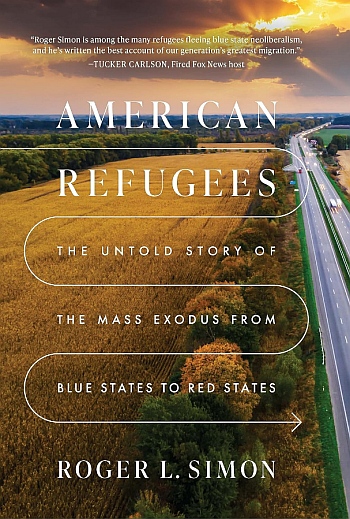
Simon: Blue State “American Refugees” Seek a Constitutional Republic

American Refugees is the story of how a culture clash precipitated a great blue state exodus, and what it means for the rest of America. Focusing particularly on Tennessee, Simon contends that only the red states can preserve the constitutional republic envisioned by the Founders. Only they can save America for our children and grandchildren. The struggle will be great, but the story will ultimately have a happy ending.

A net exodus of Americans from blue to red states has been in progress for several years now. This is largely a southbound movement, and perhaps some migrants are “running from the cold up in New England,” as the song goes. But mostly they are leaving states that are too far gone into woke socialism to recover anytime soon—in favor of states with more conservative governance.

The conventional wisdom, or fear, among red state locals is that these newcomers, despite having “voted with their feet,” will continue to vote for the same policies that ruined the states from which they are fleeing. Roger Simon argues that the reverse may be more accurate: blue-to-red migrants tend to be serious constitutional conservatives, and they might be the cavalry that rescues the red states from their own problems.

About Roger

Roger L. Simon is an award-winning novelist, Oscar-nominated screenwriter, co-founder of PJMedia, and now, editor-at-large and columnist for The Epoch Times. He is the author of ten novels, including the Moses Wine detective series, seven produced screenplays and two non-fiction books. He has served as president of the West Coast branch of PEN, a member of the Board of Directors of the Writers Guild of America, and was on the faculty of the American Film Institute and the Sundance Institute. His many journalistic articles have appeared in The New York Times, The Wall Street Journal, The Los Angeles Times, Commentary, Real Clear Politics and City Journal, among others. Mr. Simon has also been a Hoover Institute Media Fellow.


Book Signing and Speaking Engagement: Roger L. Simon, author, American Refugees: The Untold Story of the Mass Migration from Blue to Red States

Warren County Conservatives Meeting, April 23, 2024 6:30 p.m. Hilton Garden Inn & Suites. 1020 Wilkinson Trace. Limited seating available. Reserve your seat today.

New BG resident considers himself ‘lucky in Kentucky’

This column was originally published in the Bowling Green Daily News on February 7, 2019, and is being republished here, with the author’s permission.

By Chip Ford

“Kentucky is the worst state in the nation to retire in.”

That’s what I recently heard on WKCT radio early one morning, according to a new WalletHub report.

Kentucky was rated the bottom 50th out of all 50 states — the very worst.

“That’s rubbish,” I said to myself.  I’d just arrived in Bowling Green two months before, after extensive research into where I wanted to relocate when I fled Massachusetts.  I phoned in to the radio station and disputed that report’s ridiculous conclusion.

I didn’t move here to retire, though I’m not far from it.  I moved to escape the extremely high-cost and politically oppressive commonwealth I’ve long battled against.  As executive director of Citizens for Limited Taxation, the largest, longest-established taxpayers’ rights group in Massachusetts, after two-plus decades I couldn’t tolerate it much longer.  A bolt of inspiration struck out of nowhere late one evening last March:  “I don’t need to put up with this, there are options.”  My research was launched at that moment.

My criteria were simple.  I wanted to find a lower cost-of-living state, with a more temperate climate, with less government control and demands over my life.  It could be anywhere else in the country.  After weeks of deep research — what I’ve done best for Bay State taxpayers for decades — the result surprised me.  The place I wanted to be was Kentucky, specifically Bowling Green.

My decision surprised friends, colleagues, and family even more so.  No, I didn’t know anyone there; no, I’ve never been there, had never given Kentucky a passing thought.  Though I had a good idea, still I had to pull out a map to find where Kentucky is specifically located among the states.  When a colleague saw my reams of research he commented, “I’ll bet you know more about Kentucky now than most of its residents.”

I made three trips to Bowling Green last summer before I found my new home, closed on its purchase in August.  Back home in Marblehead I plunged into clearing out and packing up, sold my house and abandoned Massachusetts in mid-November, arrived at my new home 1,100 miles and a few days later.

Eight inches of average winter snowfall here sure beats the annual four feet (a record ten feet in 2015) back there.  Before moving I sold my Chevy Blazer with its snowplow and my snowblower — brought along a shovel for emergencies and still haven’t unpacked it.

I’ve never met so many warm, gracious, friendly and helpful people as every single soul I’ve met here so far.  Even public employees are friendly and helpful, unlike the typical arrogance and disinterest doled out back there.  Instead of standing in long lines for literally hours to register a car or renew a driver’s license at a distant state Registry of Motor Vehicles office, it took twenty minutes here to change over my vehicle registration, another twenty for my driver’s license.  And it cost less.

The profit from the sale of my house (mostly market appreciation) more than paid for my similar home in Kentucky.  The $6,000 I paid in annual property taxes up there was reduced by 80 percent here.  Nobody here wants to ban firearms, or demands permission to own them.  Plastic bags and straws are not outlawed.  The state legislature doesn’t spend twelve months a year grinding out crazy new laws and raising taxes to pay for them to justify over-paid, alleged full-time legislators, as it does in Massachusetts.

When radio host Chad Young seemed incredulous of my comment about “less government” in Kentucky, I replied:  “Everything is relative, and if you were familiar with Massachusetts you’d surely appreciate my perspective.  All my friends up there do, and are envious.”

Every morning upon awakening I get a thrill when I realize I’m here, in Kentucky — that I actually pulled it off, escaped the generally endured but needless hardships.  I call it “Lucky in Kentucky.”

About Chip

After over three decades of hand-to-hand combat in the political trenches of Massachusetts, Chip escaped to Warren County in 2018. He retired in 2022 as the final executive director of Citizens for Limited Taxation, that state’s most effective taxpayers advocacy group for half a century.


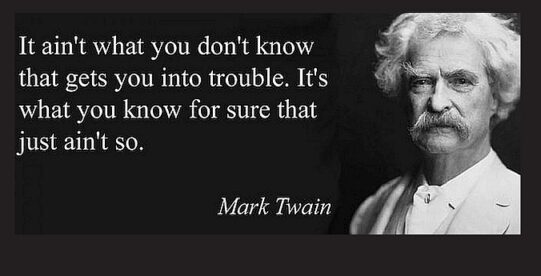
You Don’t Know What You Don’t Know – But Most of Us Never Cease Seeking It

By Chip Ford

It’s a challenge at best attempting to change someone’s belief who’s confident it’s true, despite not having bothered testing it nor giving it even a passing evaluation.

I helped run a successful grassroots taxpayers’ advocacy group for three decades in Massachusetts, of all places, until all my hope was gradually ground down and finally crushed to dust.  Five years ago, I escaped to Bowling Green.  Unexpectedly, I continued running the organization remotely by popular demand of the membership, but even that faded by the end of 2022 when I shut it down permanently.  Over those four years operating from exile, I frequently used part of Citizens for Limited Taxation’s email newsletters and on its website to advise members “It Doesn’t Need To Be ‘The Massachusetts Way’”.  I was warning that the state’s steadily increasing political repression and overbearing governing eventually makes escape the only option.

In those messages to CLT members I contrasted what I’d observed expanding back there to what I found here in Kentucky.  The comparisons were stark, even for me experiencing them firsthand.  But breaking through even those political activists’ latent complacency wasn’t working.  That’s when I realized it might not be possible when “You don’t know what you don’t know” and can’t fully comprehend until you’ve experienced the alternative opportunity.  Many of those members expressed envy for my new life, a handful had their own escape plans in mind, but few have acted on them.  Inertia, and for some their circumstances, are hard to overcome.

Even for the more adventurous of us, now termed “American Refugees” in a new book, packing up our lives and moving to a distant state meant cutting the cord to everything dear and familiar and starting all over again.  It was a difficult decision to leave behind a comfortable home and job, friends, neighbors, and family, favorite places, local knowledge and customs built over a lifetime.  We refugees abandon all that and more in pursuit of the American promise as it used to and is supposed to be.  When we found and adopted our new homes, many if not most have become determined, even zealous to keep it this time.  We were more than aware of its fragility.  We had suffered the loss of that American promise once already.

Soon after arriving here in my “sanctuary state” I volunteered with the Warren County GOP as a precinct co-captain, and through that I met some even more like-minded folks who were forming a new grassroots group whose intent was to “Keep Kentucky Conservative”.  This sounded like what’s necessary if Warren County and by extension all of Kentucky is to hang onto what we have.

“You don’t know what you don’t know” works conversely as well:  one’s accepted rights and liberty can be subsumed over time through citizen apathy and inertia.  When it’s not recognized that those values are gradually being eroded, when there’s nothing with which to compare the decline and gauge it, what happened in oppressive blue states can happen anywhere, even in Kentucky.  Unless enough citizens are vigilant and active, complacency permits unwanted change, which steadily redefines the accepted norms, until it becomes too entrenched to any longer reverse.

That’s what happened over time in the state I recently had to abandon.  Remember the instructions on how to boil a frog – gradually so it doesn’t jump out of a scalding hot pot?  That’s what happened in Massachusetts over past decades despite the determined resistance of not enough of us.  It can happen anywhere, including Warren County.

I just read the recently published “American Refugees: The Untold Story of The Mass Exodus from Blue States to Red States” by Roger L. Simon, a successful Hollywood screenwriter, a founder of PJ Media, and editor-at-large of The Epoch Times.  He and his family left behind their longtime residence in California to become what he termed “refugees” in red state Tennessee, coincidentally a few months ahead of my escape from Massachusetts in 2018.  Upon learning of his book, I wondered how much if any of Mr. Simon’s views would mirror my own experiences and observations.  I was not disappointed.  Here are a few excerpts from his book I especially related with:

Chapter 5:  Rolling Out the Wrong “Welcome Wagon”

Many locals claimed that these blue staters were coming to their pristine red states not to join them, but to pollute them ideologically.  Wittingly or unwittingly, migrants were carrying with them their liberal ideas and irreligious values. . . .

Some even contemplated setting up “welcome wagons” for the blue staters to remind them of why they had come in the first place, and to gently remind them to check their virtue-signaling social justice bilge at the door. . . .

The fear that blue staters were going to pollute red states with their indelible left-wing ideology, I came to learn, could not have been more baseless.

The problem, indeed, was just the opposite. 

(Page 16)

Chapter 6:  The Rise of a New Cavalry

The newcomers were anything but liberal and progressive, overt or otherwise.  They were American refugees: people who so rejected those ideologies, who so preferred to live in a constitutional republic, that they were willing to pull up stakes; quit their jobs; leave behind friends, family, and their accustomed ways of life; and trek across the country – all to live in accordance with their values.”

Meanwhile, their destinations – the red states – had problems of their own.  Most of them did, anyway.

Even reliably red Tennessee, which voted two-thirds for Donald Trump in 2020, had issues. . . .  there was a significant disconnect between many of the legislators and their voters.  A list of desires from the state’s conservative citizenry, for everything from educational reform to election integrity, went unanswered.  In the worst cases, politicians reneged on their promises, betraying their constituents. . . .  (Page 17)

A more pragmatic quote that keeps popping up is former Speaker of the House Tip O’Neill’s “all politics is local” – and for good reason.  The realm of politics that the people could change was mostly local, indeed almost entirely local.  Whether or not the refugee cavalry were aware of O’Neill’s quote, his principle was motivating their actions and continues to do so.  The battle to retrieve America is being fought in the local sphere, because here is the best place for it to be fought by the ordinary citizen. 

(Page 21)

Chapter 40:  “Country On”:  New Year’s Eve 2023, Nashville

Among the last compulsions to wither away, if it ever does completely, is the need to convince friends and family in your state of origin (ones you may have disappointed or even angered in leaving) that you did the right thing, and that maybe they should even follow you.  These are the last people you can influence because it often threatens them the most.  It’s easier to sway a random person sitting next to you on a plane. 

(Pgs. 189-90)

Chapter 42:  On the Cusp of The New

Refugees are different kinds of people.  To them, the ability to “move on” is part of their DNA.  They are people for whom looking for new horizons is a natural, almost instinctive, part of life.  Standing still, for them, is moving backward. 

(Pg. 203)

Chapter 45:  The Makings of a Wannabe Redneck

I have decided not to allow a few retrograde politicians to disturb my enjoyment of life in the great free state of Tennessee.  We all have to accommodate to where we live at some level.  In a way, it’s a positive compromise from which one can grow.  And besides, since I haven’t met a single refugee who returned to his state of origin, I don’t want to be the first. 

(Page 215)

One of the personally most satisfying of his findings appeared in Chapter 4:  Why Are These People So Nice?

People, in general, were much nicer.  In the first few weeks after my arrival, after so many years in New York and Los Angeles, I even thought such friendly behavior was a trick. 

(Page 11)

I’ve said exactly the same.  Just a few months after arriving in Bowling Green I wrote an op-ed column for The Daily News which I’d titled “Lucky in Kentucky,” in which I noted:

I’ve never met so many warm, gracious, friendly and helpful people as every single soul I’ve met here so far.  Even public employees are friendly and helpful, unlike the typical arrogance and disinterest doled out back there.  Instead of standing in long lines for literally hours to register a car or renew a driver’s license at a distant state Registry of Motor Vehicles office, it took twenty minutes here to change over my vehicle registration, another twenty for my driver’s license.  And it cost less.

Lucky in Kentucky, The Daily News

Roger Simon, now living outside Nashville, and I have exchanged emails.  He mentioned “I have yet to motor up to Bowling Green, but it’s on the bucket list.”  I intend to invite him and his wife Sheryl to drive up from Nashville and speak to our Warren County Conservatives group at one of our monthly meetings.  I’m hoping he’ll accept my invitation and join us in the near future.  I look forward to meeting a fellow trooper of the “New Cavalry.”

About Chip

After over three decades of hand-to-hand combat in the political trenches of Massachusetts, Chip escaped to Warren County in 2018. He retired in 2022 as the final executive director of Citizens for Limited Taxation, that state’s most effective taxpayers advocacy group for half a century.