
By Mark Doggett
I was born the illegitimate child of an unwed teenage mother in post-war Germany. The prospects for a child conceived in that time and place were grim. My mother faced a difficult decision. Thankfully, abortion was still rare, and she chose instead to give me up for adoption—a decision that, in hindsight, was the best possible outcome. The alternative was likely a life of poverty and limited opportunity.
Post–World War II Europe was still reeling from the devastation of war. Unemployment was high, and cities and infrastructure were only beginning to recover.
At that time, even American missionaries with modest incomes were considered wealthy by German standards. For many Germans, life in the United States was little more than a dream. That dream took its first step for me with a letter from Frau Fiebiger, a German social worker who, in broken English, encouraged a visit to the local orphanage.
The paperwork required for adoption and immigration was daunting and costly. My adoptive parents had to gather birth certificates, income statements, health and marriage records, proof of citizenship—plus pay adoption fees. Then came the passport applications, letters to the Department of Justice and the American Consulate, all requiring notarized duplicates. They spent hundreds of dollars on copies, filing fees, and postage—a significant financial and time burden for a low-income preacher with a wife and two teenage children.
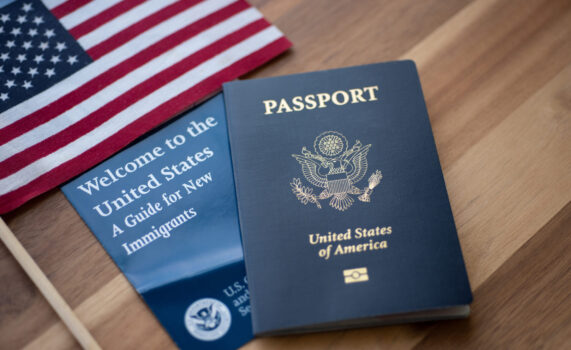
That effort brought me to the United States legally. Thirteen years later, my adoptive parents were finally able to help me apply for naturalized citizenship. As a child, I had no real understanding of how much effort was required to keep me here permanently.
I recall saying around age ten that I’d be fine staying a German citizen. But my adoptive parents assured me there would be more opportunities as an American. And boy, were they right. Becoming an American citizen remains the best thing that ever happened to me.
In Germany, education is government-funded—but tightly structured. Students are tested early and often for knowledge and aptitude. Those who don’t perform well are directed into vocational or trade schools. Those who excel are placed in academic tracks. The government doesn’t subsidize failure, and there’s no school choice.
Not so in America. Here, anyone can attend school regardless of performance, as long as they’re willing to work for it. I didn’t do well in school early on, but because I lived in the U.S., I wasn’t tracked into a life-long caste system. I found motivation in my last two years of high school and eventually earned multiple degrees. Hard work and determination—not test scores—made the difference.
As a citizen, I was able to apply for jobs I never would have qualified for otherwise. I went on to have a successful career in the aerospace industry as an engineer with top-secret clearance. None of that would have been possible without citizenship.
America is the most generous nation on earth. We want people to come here, succeed, and contribute to our communities. But they should do so through a safe and legal process. My adoptive parents’ sacrifice taught me that reward follows effort. I am grateful to be here, and I never take this country’s generosity for granted.
If you can’t come here legally, you shouldn’t be here. If you do come, work hard, stay out of trouble, and love your new country. We are Americans—no hyphens needed.
About Mark

Mark Doggett is a retired professor in the School of Engineering and Applied Sciences at Western Kentucky University.